|  | Welcome to guidebook, a website dedicated to preserving and showcasing Graphical User Interfaces, as well as various materials related to them.
|  |
| |
| | Site last updated on 6th October 2006:
| |
| |
| | New set of posters with mouse pointers:
|  |  |
| |
| |
| | | Acorn Archimedes’ operating system Arthur is told to stand for “A Risc-based operating system by THURsday,” reflecting the extraordinary short time it took to finish it. The rumour has it that ArthurOS was a quickly devised replacement for the original system ARX, which failed to materialize. |
| |
| |
|
| |  | The legendary Windows 95 release, which made many people stand in queues that one memorable August night. As the underlying OS, the GUI also received many improvements, including better use of right mouse button and the Start button.
 |
| |
| |
| | 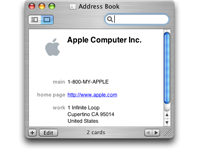 | Apple Computer Inc. is so nice (or so vain?) that it includes its own wherebouts in Mac OS X Panther’s address book. Is this the rule or the exception? Check it out.
 |
| |
| |
| |  | April 1982 issue of Byte ran a thorough article on designing the Xerox Star user interface, seen through the eyes of five Xerox employees. Read the article, get to know the ideas behind the first commercial graphical user interface ever, and see some interesting screenshots.
 |
| |
| |
|